When you pick up a self-test kit, your eyes might scan for the price, the test name, or the time to result. But there are two small, powerful acronyms that often go unnoticed: CE and IVD. For most Indians navigating the growing world of at-home diagnostics, these labels are a mystery. Yet, they are the most critical stamps of trust you can find on the box. They are not just regulatory jargon; they are your assurance that the test in your hands meets stringent international standards for safety and performance. In a market flooded with options, understanding what these certifications mean is the first step to taking control of your health with confidence.
Breaking It Down — European Safety Standards for Diagnostics
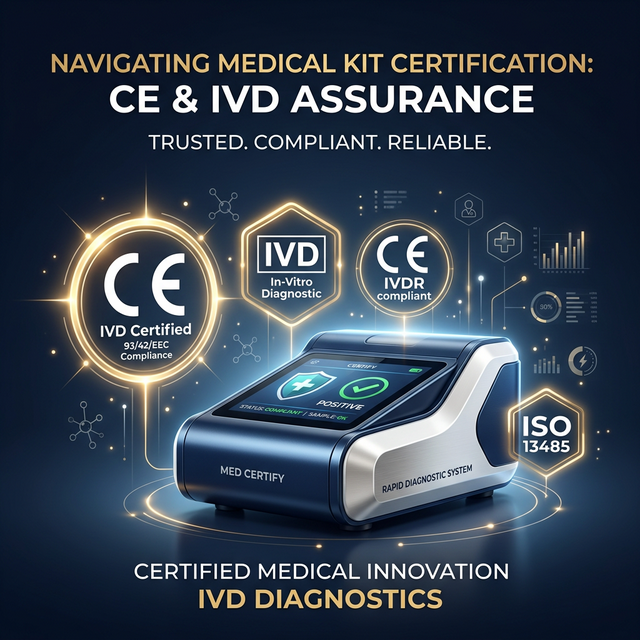
Let's decode the alphabet soup. CE Marking (Conformité Européenne) is a mandatory certification for products sold in the European Economic Area. It's a manufacturer's declaration that the product complies with the EU's health, safety, and environmental protection standards. For medical devices like diagnostic tests, this is a rigorous process. It means the test has been designed and manufactured under a Quality Management System, its performance has been clinically validated, and its instructions are clear to ensure you can use it safely and effectively at home.
IVD stands for In Vitro Diagnostic. This simply refers to tests done on samples like blood, saliva, or urine taken from the human body. An IVD certification, especially under the EU's IVD Regulation (IVDR), is a more specific and recent layer of scrutiny. It focuses intensely on clinical evidence, analytical performance (how well the test detects what it claims to), and post-market surveillance. When a test kit is CE-IVD certified, it has passed a dual gate of global benchmarks. For you, the user, this translates to a product that is not only safe but also fundamentally reliable in its core function: giving you an accurate health snapshot.
What It Means for Accuracy (>95% Clinical Accuracy)
Certifications are the "how," but accuracy is the "what" you truly care about. The rigorous clinical validation required for CE-IVD certification directly translates to the high accuracy rates you see quoted. A claim of >95% clinical accuracy isn't a marketing slogan; it's a data-backed result from trials comparing the self-test kit's performance to gold-standard laboratory methods.
Consider a scenario familiar to many urban Indians: persistent fatigue. It could be due to a Vitamin D deficiency, especially given our indoor lifestyles and sun avoidance, or a B12 deficiency, common in vegetarian diets. When you use a certified test, you can trust that a positive or negative result is a highly reliable indicator of your actual levels. This precision empowers you to seek targeted nutritional advice or medical consultation, moving beyond guesswork. This level of trust is essential for more critical screenings, such as using a cardiac marker test for timely insights, though any abnormal result must be followed up immediately with a healthcare professional.
How QUIQ Tests Compare to Lab Tests on Reliability
A common concern is: "Can a small kit really match a big lab?" The answer lies in the technology and the certification. Modern rapid tests use the same core immunological principles (like lateral flow assay) that many initial lab tests employ. The key difference is the format, designed for simplicity without sacrificing science. QUIQ's entire range, from wellness to infectious disease tests, is CE & IVD certified. This means each kit, whether for rapid dengue detection during monsoon season or monitoring cholesterol, undergoes the same validation pathway.
The process involves testing hundreds of samples against laboratory benchmarks to ensure sensitivity (correctly identifying positives) and specificity (correctly identifying negatives) meet strict thresholds. The result is a diagnostic tool that brings lab-grade reliability to your fingertips in 10-15 minutes, bypassing travel, long wait times, and potential loss of privacy.
Why Certification Matters When You're Testing Yourself at Home
When you are your own sample collector and first-line interpreter, the stakes for product integrity are even higher. Certification is your safeguard. It ensures the lancet is sterile, the buffer solution is stable, and the test strip will perform as intended in a non-clinical environment. It guarantees the instructions are comprehensible, minimizing user error—a vital aspect for tests that require precise steps, like the HbA1c test for diabetes management.
In India, where healthcare access can be uneven, self-testing is a powerful tool for democratizing health awareness. But this empowerment must be built on a foundation of trust. Choosing a certified test means you are investing in a result you can base decisions on, whether it's improving your diet after a ferritin test or seeking urgent care after a positive tropical fever test. It turns a simple kit into a credible partner in your health journey.
Your health decisions deserve the highest standard of evidence. Don't let unfamiliar acronyms deter you; let them guide you to smarter choices. Look for the CE & IVD mark—it's the silent guardian of your test's credibility. Explore the full range of certified, affordable self-test kits at QUIQ and take the first step towards knowing your health with confidence. Remember, self-testing is a tool for awareness and monitoring; always consult with a doctor for a definitive diagnosis and treatment plan.
Take Control
Know Your Health
Premium at-home self-test kits under ₹99. CE & IVD certified results in minutes. No lab visits, no appointments.
Shop Now